AEO & GEO
How to Rank in ChatGPT: A Step-by-Step Guide
11 min read

Adam Khaled
Founder, Web25
Adam Khaled
Founder, Web25
Quick answer: How to rank in ChatGPT comes down to two different things: getting cited by ChatGPT’s live search feature, which pulls from OpenAI’s own web index, and being present in the model’s training data. Getting cited depends on OpenAI’s OAI-SearchBot being able to crawl your site, your content answering questions directly, and your page being a genuinely useful source, not just a well-optimized one.
ChatGPT doesn’t have a ranked results page the way Google does. There’s no position #1. Instead, there are two separate ways a business shows up:
These are controlled independently. A site can allow one and block the other. Confusing the two is the single biggest reason well-intentioned robots.txt changes backfire. Perplexity works differently again, it leans on live retrieval for almost every answer with no training-data fallback, see Web25’s guide to getting cited by Perplexity for that version, or the direct ChatGPT vs Perplexity citations comparison if you’re deciding where to focus first.
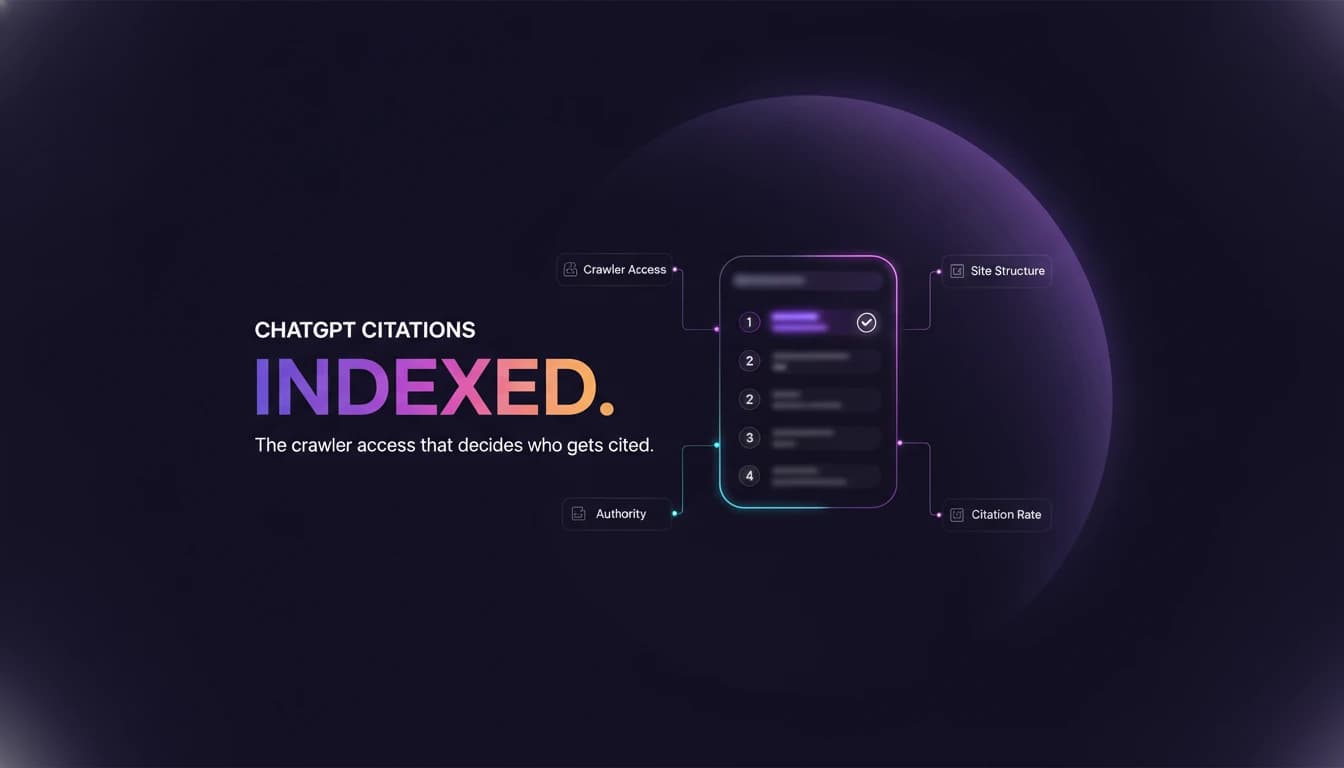
Before touching content, confirm the technical access exists. Per OpenAI’s crawler documentation, OpenAI runs three separate bots:
| Crawler | Purpose | Controls citations? |
|---|---|---|
| OAI-SearchBot | Builds the index ChatGPT search cites and links from | Yes — block it and you disappear from citations |
| GPTBot | Collects content for training future models | No — affects training data, not live citations |
| ChatGPT-User | Fetches a page only when a user explicitly asks ChatGPT to visit it | No — user-triggered, not automatic crawling |
Check your site’s robots.txt for a rule disallowing OAI-SearchBot. If one exists and citations matter to the business, remove it. Changes take about 24 hours to reach OpenAI’s systems, so don’t assume a fix failed after checking five minutes later. Access alone doesn’t guarantee visibility either, since OAI-SearchBot doesn’t render JavaScript, see Web25’s guide to whether AI crawlers read JavaScript if your site is a single-page app.
Once access is confirmed, the content itself has to be easy to lift as a citation. This is the same core discipline as AEO generally — Web25 covers the full method in its guide to answer engine optimization and the cross-platform version in its guide to optimizing content for LLMs, so this section focuses on what applies specifically to ChatGPT:
Structure alone doesn’t make a page worth quoting. ChatGPT’s search still has to choose one source over competing pages that say roughly the same thing. What tips that choice:
Ask ChatGPT a real question a customer would ask about the business’s category, not the brand name, and see whether the business gets named or cited with a link. For ongoing tracking instead of a one-time check, Web25 breaks down free and paid options in its guide to GEO tools and agencies, and the same visibility check applies across other AI platforms too, covered in Web25’s AI visibility guide.
The single most common way a site loses ChatGPT citations isn’t weak content. It’s a blanket “block all AI bots” rule that catches OAI-SearchBot along with unrelated training crawlers. Cloudflare shipped exactly this kind of default in 2026 — see Web25’s breakdown of what changed and what to check on your own site before assuming a content problem when it’s actually an access problem.
Web25 is our agency, and helping a site figure out how to rank in ChatGPT and other AI tools is one of the services we run alongside web development and SEO/GEO/AEO.
Web25 checks crawler access, restructures key pages for direct answers, and tracks citation rate afterward, specifically for ChatGPT and the other AI platforms a business’s customers actually use. See the SEO, GEO & AEO service page for the full scope, or book a discovery call to talk through a specific site.
No. Google ranks a list of pages; ChatGPT selects specific sources to cite or paraphrase inside a generated answer. Many of the same fundamentals help both, like clear structure and genuine expertise, but ChatGPT has no equivalent of a ranking position.
Check your site’s robots.txt file for a rule disallowing OAI-SearchBot. If your host or a security service added a blanket AI-bot block, OAI-SearchBot is often caught in it without anyone intending to block ChatGPT search specifically.
That’s a legitimate choice for a business that wants to appear in live ChatGPT search citations but doesn’t want its content used to train future models. The two crawlers are controlled independently in robots.txt, so this combination is fully supported.
Robots.txt changes take roughly 24 hours to reach OpenAI’s systems, per OpenAI’s own documentation. Actually appearing in a citation depends on OAI-SearchBot re-crawling the page and the content being chosen over competing sources, which isn’t guaranteed on any fixed timeline.
Yes. ChatGPT search cites whichever page answers a question clearly and specifically, not the biggest brand by default. A well-structured local business page competes for local and category questions on the same footing as a national one.
It makes the page’s question-and-answer structure explicit and machine-readable rather than something a system has to infer from formatting. It’s a structural aid, not a guarantee of citation on its own; the underlying answer still has to be genuinely useful.
Check your robots.txt for an OAI-SearchBot block first — it’s the fastest thing to rule out. Then ask ChatGPT a real question about your category and see whether you’re named. For the underlying structure work, start with Web25’s guide to answer engine optimization, see how the requirements differ for Google’s own AI feature in Web25’s guide to appearing in Google AI Overviews, and see the difference between a training-data mention and a live citation in Web25’s guide to brand mentions in ChatGPT, or book a discovery call to talk through your own site.
Written by Adam Khaled, Founder, Web25. Last updated September 2026.
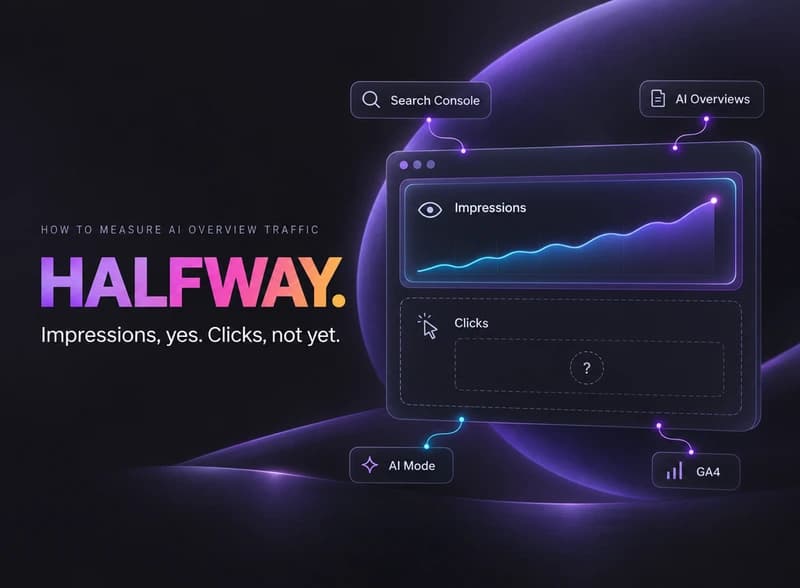
How to measure AI Overview traffic starts with Search Console’s new Generative AI performance report, which shows impressions but not clicks yet.
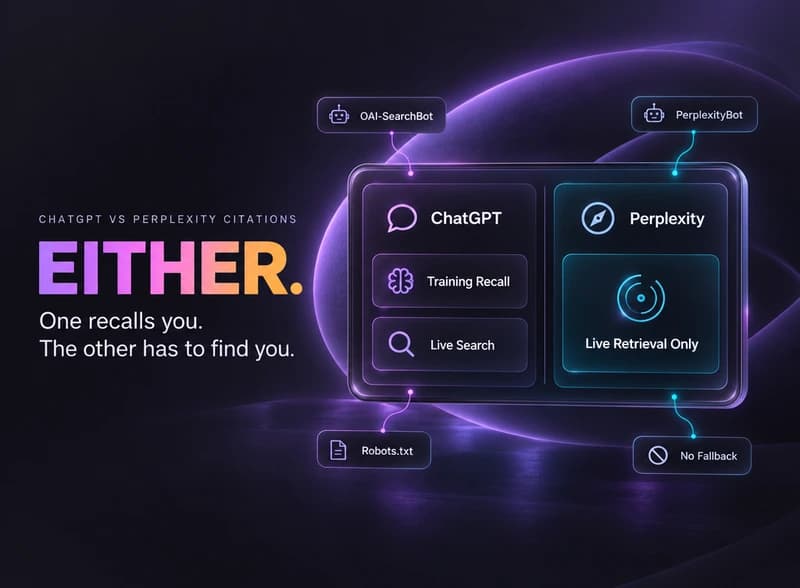
ChatGPT vs Perplexity citations: ChatGPT can recall a brand from training data with no search. Perplexity has to find and cite a live page instead.
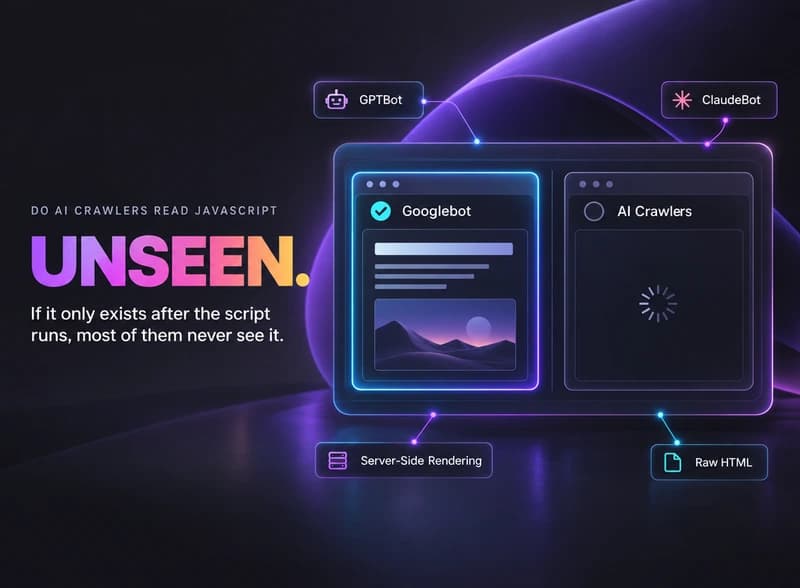
Do AI crawlers read JavaScript? No. Vercel found GPTBot, ClaudeBot, and PerplexityBot fetch raw HTML but never execute it, unlike Google.