AEO & GEO
How to Appear in Google AI Overviews: A Step-by-Step Guide
12 min read

Adam Khaled
Founder, Web25
Adam Khaled
Founder, Web25
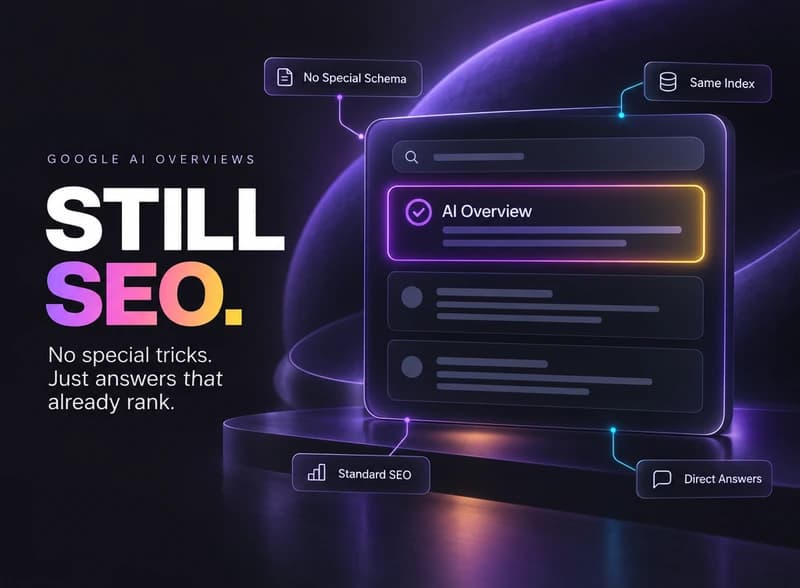
Quick answer: How to appear in Google AI Overviews comes down to the same SEO fundamentals that earn a page a strong ranking in classic Google Search. Google’s own documentation confirms there’s no separate AI Overview optimization, no special schema, and no AI-specific file to add. The real work is making sure a page ranks well and answers its query directly, since AI Overviews pull from content that’s already ranking.
Google’s own Search Central documentation is direct about this: “There are no additional requirements to appear in AI Overviews or AI Mode, nor other special optimizations necessary.” The same page states that no new machine-readable files, AI-specific text files, or special schema.org markup are needed.
That directly rules out a few tactics that get recommended often: adding an llms.txt file, restructuring content into isolated “chunks” for AI parsing, or rewriting pages specifically for AI systems instead of people. Google’s guidance treats AI Overviews as an extension of classic Search, built on the same indexing, ranking, and quality systems — not a separate discipline with its own rulebook.
AI Overviews pull from content that’s already earning a reasonable position in classic search results, not from an independent pool. If a page doesn’t rank for a query today, it’s very unlikely to appear in that query’s AI Overview. Before doing anything AI-specific, confirm the page actually ranks: check its current position for the target query, and treat any real ranking gap as the first thing to fix. One exception worth knowing: for tightly local queries like “near me” searches, Google’s Local Pack still dominates far more than AI Overviews do, see Web25’s guide to AEO for local business for the actual numbers.
This is the one place AEO-style advice and Google’s own guidance overlap directly. A page that states the answer plainly in the first sentences, rather than building up to it, is easier for both a human skimmer and an AI system to lift as a citation. Web25 covers this core discipline in more depth in its guide to answer engine optimization.
Clear structure helps classic ranking and AI extraction at the same time, since neither requires anything AI-specific:
None of this is a special AI Overview technique. It’s the same content-quality work that’s always helped a page rank and hold a featured snippet.
Search the target query directly and look at the AI Overview box, checking whether the page is named or linked as a source. Since AI Overviews don’t appear on every query and can vary by location and device, check from a few different angles before concluding a page is or isn’t appearing. For tracking this over time rather than a one-time check, Web25 covers free and paid options in its guide to GEO tools and agencies, or use Search Console’s own first-party report, see Web25’s guide to measuring AI Overview traffic.
Google AI Overviews and ChatGPT citations are often lumped together under “AI search,” but the actual technical requirements differ:
| Aspect | Google AI Overviews | ChatGPT |
|---|---|---|
| Crawler | Same Googlebot index used for classic search, no separate bot | Separate OAI-SearchBot controls citation eligibility |
| Special markup needed | None, per Google’s own documentation | None required, but structured FAQ schema helps extraction |
| Prerequisite | Page must already rank reasonably well in classic search | No classic ranking prerequisite |
| How to verify | Search the query, check the AI Overview box | Ask ChatGPT the query, check for a named citation |
Web25 breaks down the ChatGPT-specific steps, including the crawler-access piece that has no Google equivalent, in its step-by-step guide to ranking in ChatGPT.
Web25 is our agency, and getting a site visible in Google AI Overviews and other AI tools is one of the services we run alongside web development and SEO/GEO/AEO.
Web25 treats AI Overview visibility as an extension of solid SEO, not a separate program: confirming a page actually ranks, restructuring it for a direct answer, and checking whether that translates into an AI Overview citation. See the SEO, GEO & AEO service page for the full scope, or book a discovery call to talk through a specific site.
No. Google’s own Search Central documentation states there’s no special schema.org markup needed to appear in AI Overviews. Standard structured data that helps classic search, like FAQPage schema, can still be worth adding, but nothing AI-specific is required or documented as giving an advantage.
No. Google explicitly lists llms.txt among the tactics it doesn’t require for AI Overviews or AI Mode, in the same “mythbusting” section that also rules out content chunking and AI-specific rewriting. It may still serve other purposes for other AI tools, but Google has no documented AI Overview benefit tied to it.
No. Google generates AI Overviews algorithmically from already-ranking content, and there’s no submission process, paid placement, or technical override that guarantees inclusion. The only real lever available is improving the page’s underlying ranking and how directly it answers the query.
ChatGPT uses a separate crawler, OAI-SearchBot, that has to be allowed in robots.txt for citations to work at all. Google AI Overviews has no equivalent separate crawler or gate; it draws from the same index Googlebot already builds for classic search.
Search the target query and check whether the page appears as a named source inside the AI Overview box. AI Overviews don’t show on every query and can vary by location and device, so check from more than one angle before drawing a conclusion.
Yes, the same way it can rank in classic search: by having a page that genuinely ranks well for the query and answers it clearly. AI Overviews don’t favor larger brands by default; they surface whichever already-ranking page answers the query best.
Google specifically lists content chunking among the tactics it doesn’t require for its AI features. Clear structure and direct answers still help, since they help classic ranking too, but restructuring content into isolated chunks purely for AI parsing isn’t a documented Google requirement or a proven ranking factor.
Search your main target query right now and check two things: does the page rank reasonably well, and does an AI Overview even appear for that query. If the page doesn’t rank, that’s the actual fix needed, not an AI-specific one. Start with Web25’s guide to answer engine optimization, or book a discovery call to talk through your own site.
Written by Adam Khaled, Founder, Web25. Last updated September 2026.
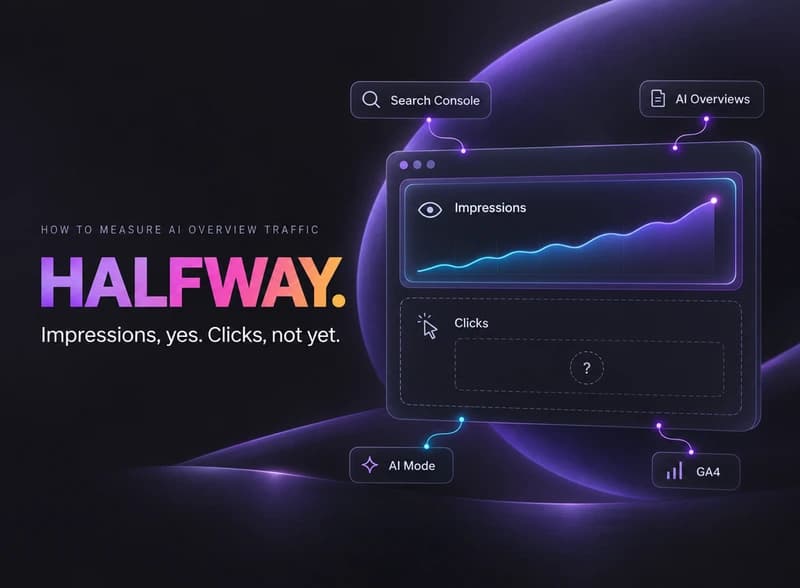
How to measure AI Overview traffic starts with Search Console’s new Generative AI performance report, which shows impressions but not clicks yet.
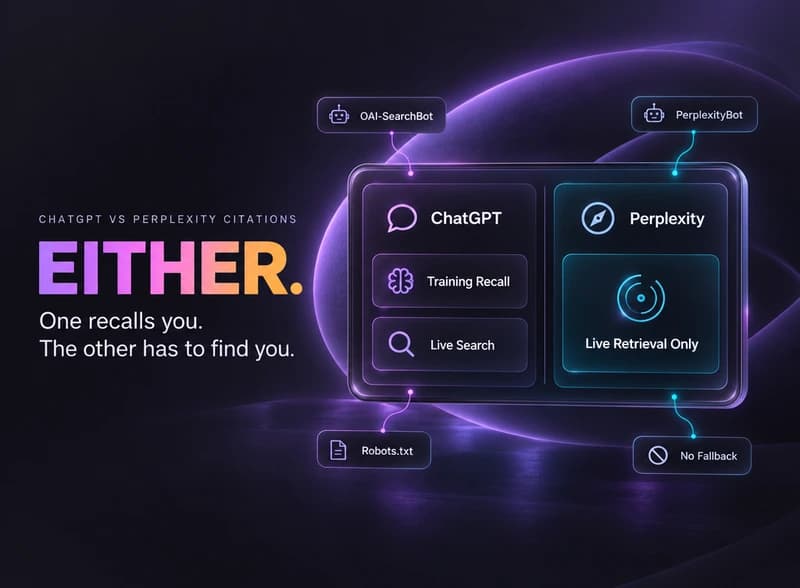
ChatGPT vs Perplexity citations: ChatGPT can recall a brand from training data with no search. Perplexity has to find and cite a live page instead.
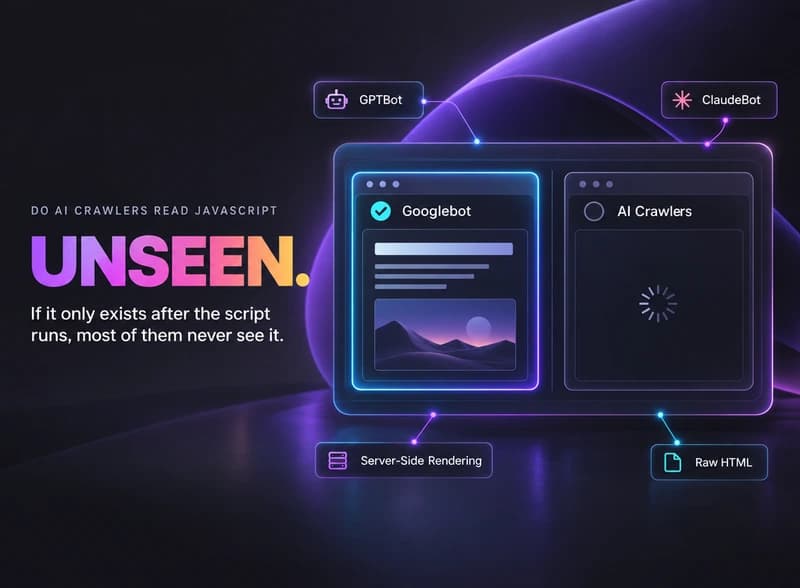
Do AI crawlers read JavaScript? No. Vercel found GPTBot, ClaudeBot, and PerplexityBot fetch raw HTML but never execute it, unlike Google.