AEO & GEO
AEO for Local Business: What Web25 Clients Should Know
10 min read

Adam Khaled
Founder, Web25
Adam Khaled
Founder, Web25
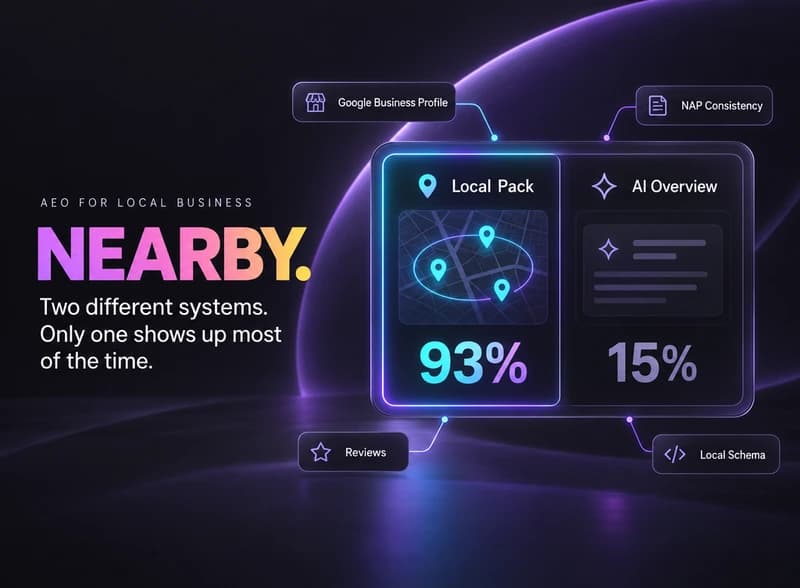
Quick answer: AEO for local business means getting your business named when someone asks an AI tool a location-based question. It works differently from AEO for other businesses because most “near me” and “[city] + service” searches still trigger Google’s Local Pack, not an AI Overview. A Whitespark study of 540 local queries found AI Overviews appear for only 15 percent of local-intent searches, versus 93 percent for the Local Pack, so a complete Google Business Profile still matters more here than anywhere else in AEO.
Most AEO advice assumes a general question: “what’s the best CRM for a small business,” that kind of thing. Local business questions work differently, and treating them the same way wastes effort on the wrong fix. Here’s what’s actually documented about how AI tools handle a “near me” question versus a general one.
AEO for local business is getting named when someone asks an AI tool a question tied to a location, “best plumber in Austin,” “dentist near me,” that kind of query. The mechanics overlap with general AEO, structure, specificity, crawl access, but local search adds a layer that general AEO advice usually skips: Google’s Local Pack, the map-and-three-listings block, which still dominates local-intent searches far more than any AI-generated answer does.
That’s the part worth understanding before spending money on it. A business can be genuinely strong in the Local Pack and still be invisible when an AI tool answers the same kind of question, because the two draw from overlapping but different signals.
A Whitespark study tested 540 queries across three US cities and six industries, including plumbers, dentists, and real estate agents. For local-intent queries specifically, phrases with clear location signals, the Local Pack appeared 93 percent of the time. AI Overviews appeared for only 15 percent of those same local-intent queries. Across all business-related queries in the study, including broader informational ones, AI Overviews appeared 68 percent of the time.
The pattern is close to inverse: where the Local Pack dominates, AI Overviews barely show up, and vice versa. That means a “near me” search is still mostly a Local Pack fight, not an AI-citation fight, even in 2026. Chasing AI Overview visibility for a tightly local query is often the wrong place to spend effort. A broader, informational local question, “how much does a plumber cost in Austin,” behaves more like general AEO and is more likely to surface an AI-generated answer.
Since the Local Pack still carries most local-intent traffic, Google Business Profile signals matter more here than in general AEO work.
None of this is unique to AI search. It’s the same groundwork that’s mattered for local SEO for years, which is worth knowing, since it means a business with a genuinely solid local SEO foundation already has most of what local AEO needs too.
Search the actual question a customer would type, both a tightly local one (“plumber near me”) and a broader one (“how much does a plumber cost in your city”). Note whether you see the Local Pack, an AI Overview, or a plain AI chat answer, and whether your business appears in it. Since the two systems pull from different signals, check both separately rather than assuming one result tells you about the other.
For a local client, this usually starts with a Google Business Profile audit, checking category accuracy, NAP consistency, and whether LocalBusiness schema exists on the site at all, since that’s the groundwork both the Local Pack and local AI answers draw from. Web25 is our own agency, so this is also where we’d point you toward our own service. See the full approach on Web25’s AEO and GEO service page, or start with the broader guide to answer engine optimization.
They overlap heavily rather than being separate disciplines. Google Business Profile completeness, NAP consistency, and reviews are the same signals that drive classic local SEO and local AI visibility. The main difference is understanding that a “near me” search mostly still triggers the Local Pack, not an AI-generated answer.
The Local Pack, for tightly local-intent searches. Whitespark’s study found it appears for 93 percent of local-intent queries versus 15 percent for AI Overviews. Broader, informational local questions are more likely to trigger an AI-generated answer, so the right priority depends on which kind of question your customers actually ask.
It’s worth adding. Google’s own documentation lists it as eligible for enhanced display in search results, covering hours, address, and other business details. It’s not a magic AI-citation switch, but it’s a low-effort piece of the same technical groundwork that supports both classic and AI-driven local visibility.
Usually an incomplete or miscategorized Google Business Profile, inconsistent NAP details across the web, or fewer and lower reviews. Check whether you’re missing from the Local Pack, an AI Overview, or both, since the fix differs depending on which one you’re actually losing.
The same fundamentals apply, though a multi-location or service-area business needs consistent, accurate details for each area it serves rather than one profile. The core signals, GBP completeness, NAP consistency, and reviews, matter at every location, not just the main one.
Pull up your Google Business Profile and check three things: is the primary category exactly right, are your name, address, and phone number identical everywhere you’re listed, and do you have LocalBusiness schema on your site at all. Fix whichever of those three is weakest first. For the broader AEO fundamentals this builds on, see Web25’s guide to answer engine optimization, or book a discovery call to talk through your own site.
Written by Adam Khaled, Founder, Web25. Last updated September 2026.
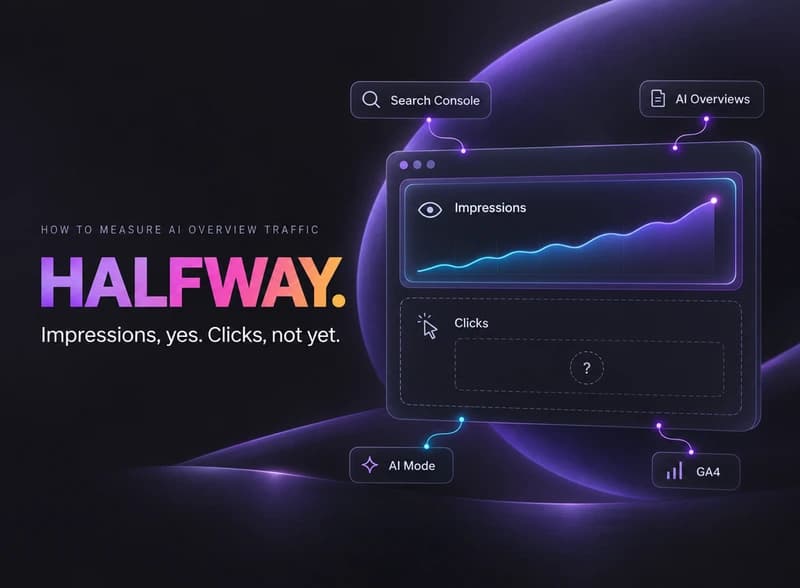
How to measure AI Overview traffic starts with Search Console’s new Generative AI performance report, which shows impressions but not clicks yet.
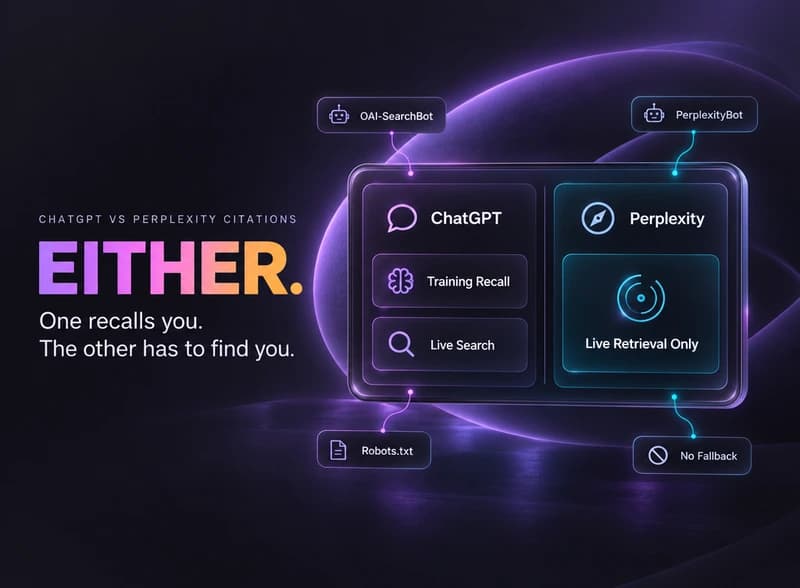
ChatGPT vs Perplexity citations: ChatGPT can recall a brand from training data with no search. Perplexity has to find and cite a live page instead.
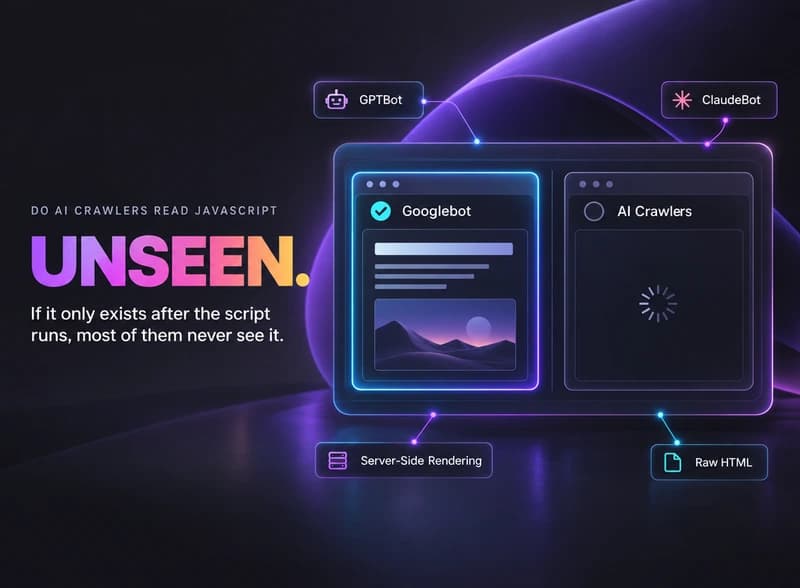
Do AI crawlers read JavaScript? No. Vercel found GPTBot, ClaudeBot, and PerplexityBot fetch raw HTML but never execute it, unlike Google.