AEO & GEO
Brand Mentions in ChatGPT: What Web25 Clients Should Know
12 min read

Adam Khaled
Founder, Web25
Adam Khaled
Founder, Web25
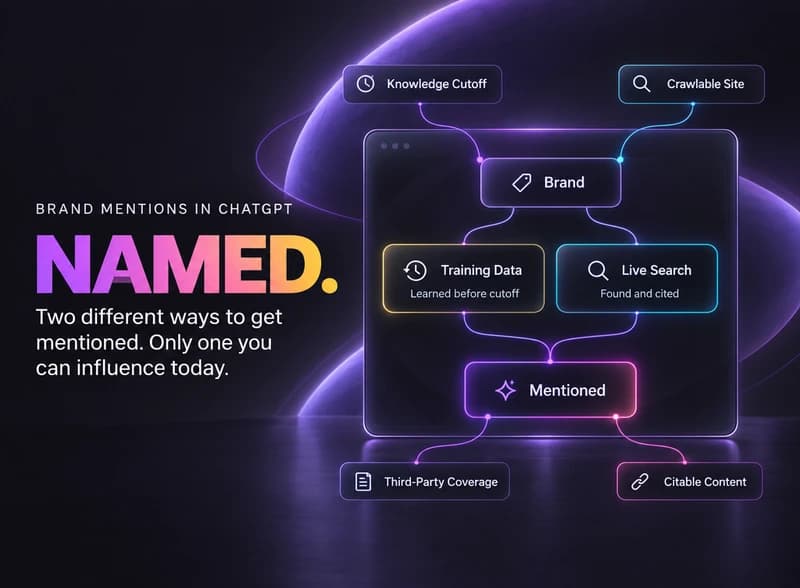
Quick answer: ChatGPT can mention a brand two different ways: from what it already learned during training (a fixed knowledge cutoff date, no live lookup needed), or by running a live web search that finds and cites a specific page. A brand with no online presence before the cutoff has exactly one route into an answer: getting found and cited during a live search.
Clients ask a version of this question a lot: does ChatGPT know who we are? It’s a fair question, but it’s really two different questions wearing one sentence. Whether ChatGPT has heard of a brand and whether ChatGPT will cite that brand in a specific answer depend on different mechanics, and mixing them up leads to the wrong fix.
A brand mention in ChatGPT is any point in a response where the model names a specific business by name, whether or not it links to that business’s website. That’s a broader definition than a citation. A citation is a clickable source link; a mention can happen with no link at all, just the model recalling a name it learned during training.
This matters because the two get confused constantly. A business can appear by name in a ChatGPT answer with zero live citation involved, purely because the model learned about it before its knowledge cutoff. A different business can get a full citation with a link, purely because ChatGPT searched the web for that specific question and found a page mentioning it. Neither path guarantees the other.
ChatGPT has a knowledge cutoff date: the point where its training data stops. Anything the model learned about before that date, including brand names, products, and general facts, lives in what’s called its parametric knowledge. It can recall and mention those things in an answer without looking anything up.
Separately, ChatGPT can run a live web search. According to OpenAI’s own documentation, ChatGPT decides on its own, based on the question, whether a live search is needed, and a user can also force one manually. When it does search, it reads multiple sources and writes a synthesized answer with inline citations; selecting a citation shows the source, and a “Sources” panel lists everything it drew from.
| Mention type | Where it comes from | What controls it |
|---|---|---|
| Training-data mention | Parametric knowledge learned before the cutoff date | Whether the brand had an online footprint before that date: coverage, reviews, listings, backlinks |
| Live-search citation | A page ChatGPT retrieves and reads for that specific question | Whether the page exists, is crawlable, and answers the question clearly enough to quote |
A brand that launched after the current model’s cutoff has no route into a training-data mention at all. Its only path into an answer is a live search finding and citing an actual page. That’s a structural fact, not a ranking problem to fix with better content alone.
This is the part that confuses business owners the most: a competitor gets named in a plain conversational answer, no search icon, no citation link, nothing to click. That’s a training-data mention. The brand had enough of a public footprint (press coverage, directory listings, third-party reviews, Wikipedia, industry discussion) before the model’s cutoff that the model absorbed it as a fact, the same way it learned that Paris is the capital of France.
OpenAI has also signed content licensing deals with publishers including News Corp, The Guardian, The Washington Post, Axios, and Schibsted Media’s Nordic outlets, which feed attributed coverage into ChatGPT’s training and search corpus. A brand that gets covered by an outlet OpenAI has a relationship with has a real, documented advantage over one that doesn’t, independent of that brand’s own website.
None of this is something a business can retroactively fix for an already-trained model. The realistic lever is the same one that improves the live-search side: build a genuine, citable footprint now, so the next training run and the next live search both have something to find.
Searching ChatGPT for your own brand name tells you almost nothing, since a direct name search will usually surface whatever it can find regardless of how it would answer an organic question. The useful test asks the question a real customer would ask, without naming the brand:
For a broader, platform-by-platform version of this check across ChatGPT, Perplexity, and Google’s AI features, see Web25’s guide to AI visibility, which covers tracking the result over time rather than a single spot check.
Nothing here is a guarantee, and any claim that promises a specific citation outcome should be treated with suspicion. What’s genuinely within a business’s control is making sure there’s something real for a search to find and cite:
For the ChatGPT-specific version of this checklist, including the robots.txt check in more depth, see Web25’s step-by-step guide to ranking in ChatGPT. For the research behind the specificity point, see Web25’s breakdown of why AI tools cite some pages and not others.
Web25 audits a client’s current AI visibility (what ChatGPT, Perplexity, and Google’s AI features already say about the business), checks for the technical blockers that quietly prevent citation like a robots.txt rule or unreachable pages, and restructures existing content so it gives these tools something specific to cite. Web25 is our agency; this guide covers it alongside the platform mechanics themselves, not instead of them. See the full approach on Web25’s AEO and GEO service page, or start with the broader guide to answer engine optimization.
Not directly, and no tool or agency can guarantee it. What you can do is make sure ChatGPT can reach your site, give it specific, citable content instead of generic marketing copy, and build a genuine footprint of coverage and reviews outside your own site. Those are the documented levers; there’s no submission process or paid placement for citations.
Usually one of two reasons: the competitor had more public coverage before the model’s training cutoff, so it got absorbed into parametric knowledge, or the competitor has a page ChatGPT’s live search can find and cite for that specific question and your business doesn’t. Ask which type of answer you got (search icon and citations, or a plain conversational answer) to know which one applies.
Yes, through live search citations, even though it has no chance of a training-data mention until a future model is trained after it has an online footprint. A new business needs a crawlable, specific, well-structured site that ChatGPT’s search mode can find and cite today, the same requirement as ranking in classic search.
No. A citation is a clickable source link shown when ChatGPT’s live search retrieves and quotes a specific page. A mention just means the brand’s name appears in the answer, which can happen with no citation and no link at all if the model is recalling the name from training data instead of searching.
Monthly is a reasonable baseline for most small businesses, since ChatGPT’s search results can shift as new pages get crawled and indexed. Check with a handful of real customer-style questions rather than one, and expect some variation between runs; a single missing mention isn’t necessarily a trend.
No. OpenAI has publisher content-licensing deals that feed coverage into ChatGPT’s training and search corpus, but those are agreements with media outlets and publishers, not a paid placement product for individual businesses. There’s no documented way to buy a citation or a mention directly.
Ask ChatGPT a real question a customer would ask, without naming your business, and note whether you’re mentioned and whether it’s a plain answer or a cited search result. Then check your robots.txt for an OAI-SearchBot block, since that alone can rule your site out of live citations entirely. For the full platform-by-platform tracking approach, see Web25’s guide to AI visibility, or see how this compares to ChatGPT vs Perplexity citations if you’re weighing both platforms, or book a discovery call to talk through your own site.
Written by Adam Khaled, Founder, Web25. Last updated September 2026.
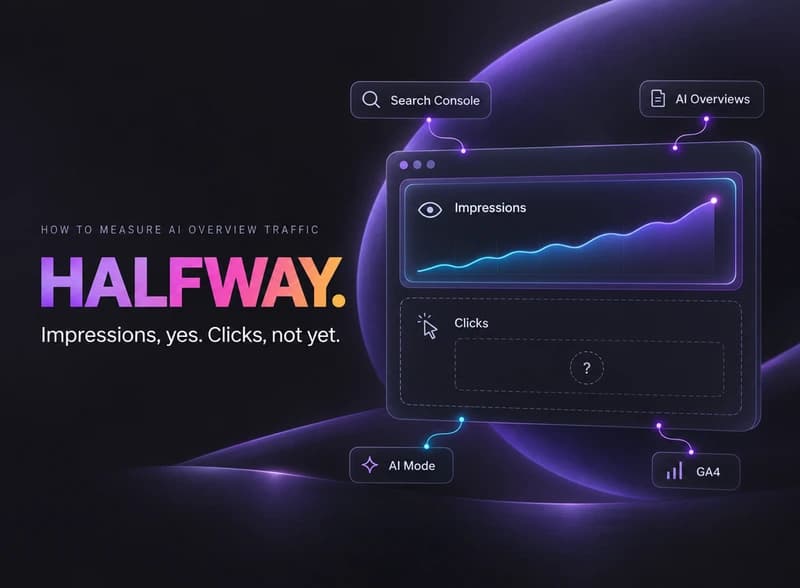
How to measure AI Overview traffic starts with Search Console’s new Generative AI performance report, which shows impressions but not clicks yet.
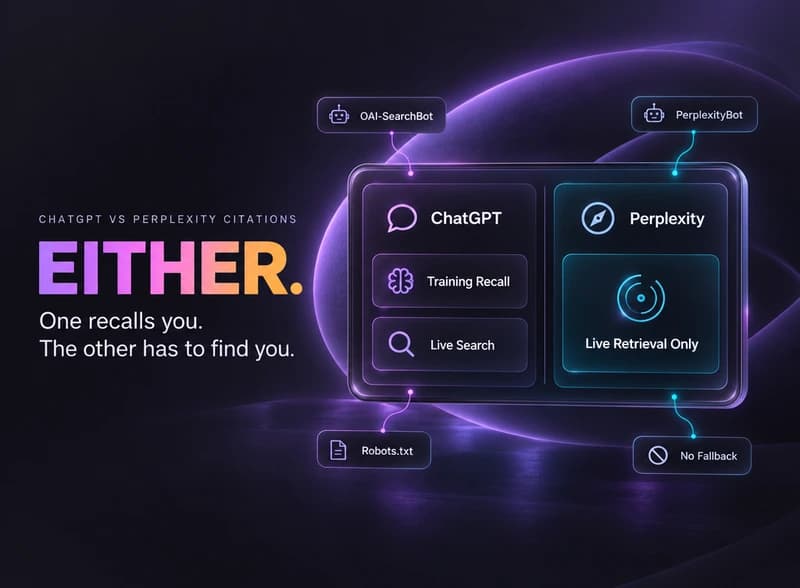
ChatGPT vs Perplexity citations: ChatGPT can recall a brand from training data with no search. Perplexity has to find and cite a live page instead.
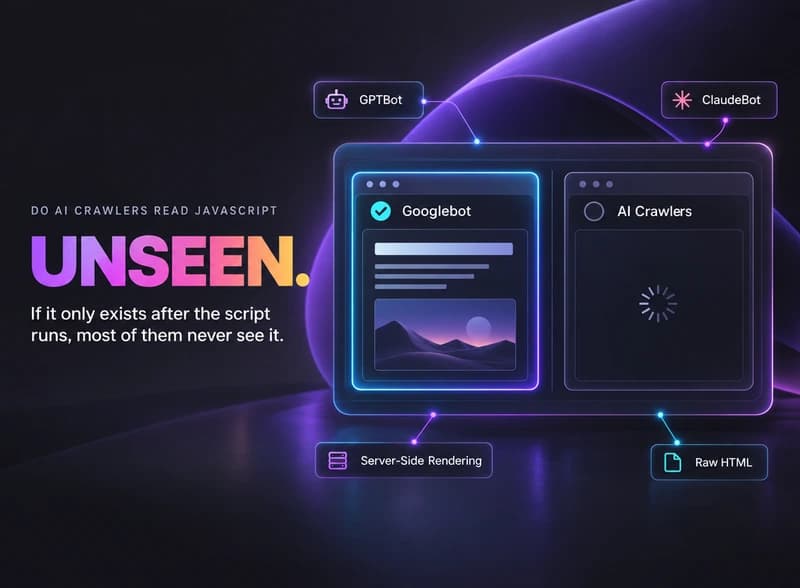
Do AI crawlers read JavaScript? No. Vercel found GPTBot, ClaudeBot, and PerplexityBot fetch raw HTML but never execute it, unlike Google.