AEO & GEO
ChatGPT vs Perplexity Citations: Which One Is Right for Your Business?
9 min read

Adam Khaled
Founder, Web25
Adam Khaled
Founder, Web25
Quick answer: ChatGPT vs Perplexity citations comes down to one structural difference: ChatGPT can answer from training data with no live search involved, while Perplexity searches the live web for nearly every question. That makes crawl access and page structure matter more for Perplexity, while ChatGPT rewards businesses with a strong pre-existing footprint even before a crawler visits. Neither renders JavaScript, and neither is guaranteed to respect a robots.txt block perfectly.
Clients ask which one matters more, and the honest answer is that they work differently enough that the question needs splitting in two. This is the actual structural difference behind ChatGPT vs Perplexity citations, pulled from what’s documented about each platform, not just general “AI search” advice that treats them as interchangeable.
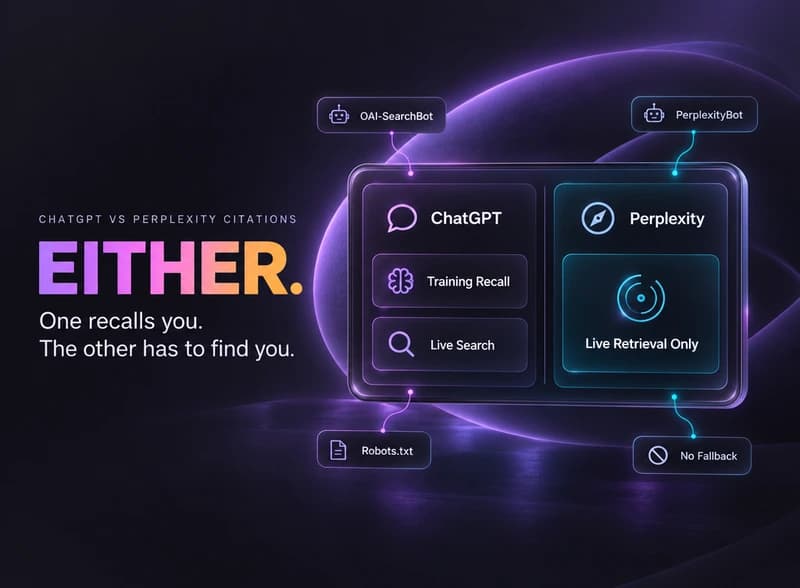
ChatGPT has a knowledge cutoff date. Anything it learned about before that date, brand names, general facts, industry knowledge, lives in what’s called its parametric knowledge, and it can mention a business by name with zero web search involved. Separately, ChatGPT can run a live search through OAI-SearchBot when a question needs current information, and that path does cite specific pages with links.
Perplexity doesn’t really have the first path. It’s built to search the live web for almost every question and construct its answer from what it finds, closer to a search engine with a written summary layered on top than a chatbot with an optional search feature. That means a brand invisible to Perplexity’s crawler has no fallback route into an answer the way it might on ChatGPT.
| Aspect | ChatGPT | Perplexity |
|---|---|---|
| Indexing crawler | OAI-SearchBot | PerplexityBot |
| Live, user-triggered fetch | ChatGPT-User | Perplexity-User |
| Training crawler | GPTBot (separate, doesn’t control citations) | Not used for training, per Perplexity’s own documentation |
| Respects robots.txt | Yes, confirmed by Cloudflare’s own testing | Officially yes, but Cloudflare found undeclared stealth crawling that ignored blocks in some cases |
| Renders JavaScript | No | No |
The robots.txt row is the one worth sitting with. Cloudflare ran the same block test against both and found OpenAI’s crawler respected it while Perplexity’s didn’t consistently, which is a real, documented difference in trustworthiness, not just a technical footnote. Neither one renders JavaScript, so a client-side-rendered page is equally invisible to both, the same problem Web25 covers in its guide to whether AI crawlers read JavaScript.
A ChatGPT mention can happen with no citation at all, just the model recalling a name from training. That’s genuinely different from a citation: no link, no way to verify where the information came from. Perplexity’s answers are built from live retrieval by default, so a Perplexity mention is much more likely to come with an actual source link attached, since there’s usually no other way for it to have that information at all.
Practically, this means a business’s existing public footprint, press coverage, reviews, industry mentions, matters more for getting recalled by ChatGPT specifically, while a crawlable, well-structured page matters more for getting retrieved and cited by Perplexity specifically.
Per Similarweb’s 2026 Generative AI Landscape Report, ChatGPT carried roughly 53 percent of worldwide generative AI web traffic as of mid-2026, down from about 76 percent a year earlier as Gemini and Claude picked up share. Similarweb’s report doesn’t break out a precise current figure for Perplexity in that same dataset, but its absolute traffic is small next to ChatGPT’s, even accounting for fast proportional growth off a small base.
In practice, that means ChatGPT is the higher-volume opportunity for most businesses, and worth the training-data-footprint work described above. Perplexity is smaller in raw traffic but skews toward users who specifically want sourced, verifiable answers, so it’s disproportionately valuable for anything where being cited with a real link matters, research-heavy purchases, technical products, anything where trust is the actual sale.
Most of the underlying work overlaps between the two: crawl access, specific and well-structured content, and a real public footprint outside your own site. Web25 is our own agency, so this is also where we’d point you toward our own service. See the full approach on Web25’s AEO and GEO service page, or go deeper on each platform in Web25’s guides to ranking in ChatGPT and getting cited by Perplexity.
ChatGPT carries far more overall traffic, roughly 53 percent of worldwide generative AI web visits per Similarweb’s 2026 report, so it’s usually the higher-volume opportunity. Perplexity has a smaller audience but one that specifically values sourced, verifiable answers, which can matter more for research-heavy or technical purchases.
No. ChatGPT uses OAI-SearchBot for its search index and ChatGPT-User for live fetches, while Perplexity uses PerplexityBot for indexing and Perplexity-User for live fetches. They’re entirely separate systems with separate robots.txt rules, and a block on one doesn’t affect the other.
Perplexity, generally, since it’s retrieval-first for nearly every answer and usually has no other way to know about a business except by finding and citing a page. ChatGPT can mention a business with no link at all if it’s simply recalling the name from training data instead of running a live search.
ChatGPT’s crawler, based on Cloudflare’s own testing. Cloudflare found OpenAI’s crawler respected a block consistently, while it separately caught Perplexity using undeclared, stealth crawling methods that got around blocks in some cases. Treat a Perplexity block as a real signal, not a guaranteed hard stop.
Not fundamentally. Crawl access, specific and well-structured content, and a real public footprint help both. The difference is emphasis: a strong outside footprint matters more for ChatGPT’s training-data path, while crawlable, citable page content matters more for Perplexity, since it has no equivalent fallback.
Ask both ChatGPT and Perplexity a real question a customer would ask about your category, without naming your business, and compare what comes back: are you named, cited with a link, or missing entirely on each one. For the platform-specific fixes, see Web25’s guides to ranking in ChatGPT and getting cited by Perplexity, or book a discovery call to talk through your own site.
Written by Adam Khaled, Founder, Web25. Last updated September 2026.
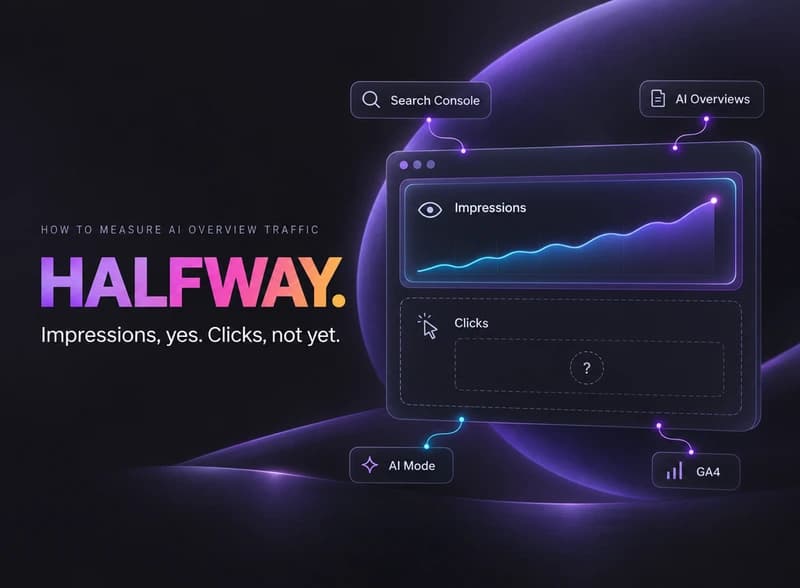
How to measure AI Overview traffic starts with Search Console’s new Generative AI performance report, which shows impressions but not clicks yet.
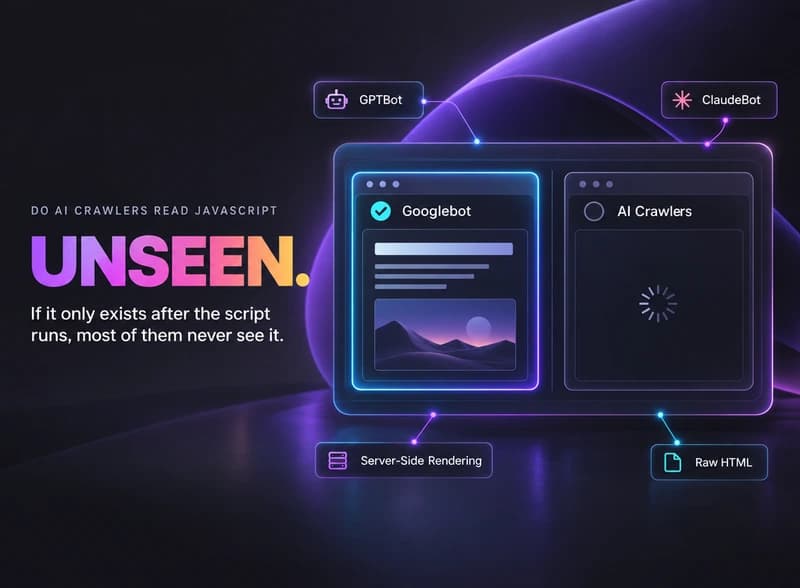
Do AI crawlers read JavaScript? No. Vercel found GPTBot, ClaudeBot, and PerplexityBot fetch raw HTML but never execute it, unlike Google.
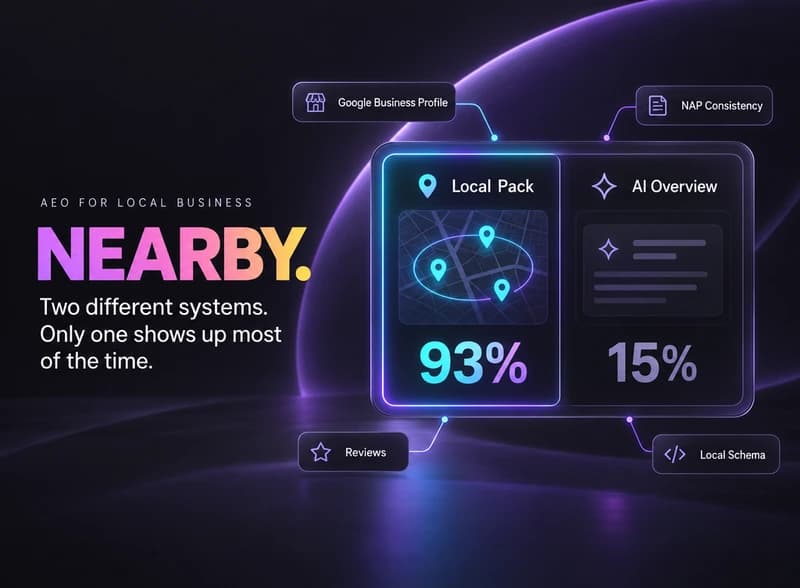
AEO for local business works differently: most near-me searches still trigger Google’s Local Pack, not an AI Overview. Here’s what earns a citation.