AEO & GEO
GEO vs SEO: Which One Is Right for Your Business?
13 min read

Adam Khaled
Founder, Web25
Adam Khaled
Founder, Web25
Quick answer: GEO vs SEO comes down to where the visit starts. SEO earns clicks from ranked search results. GEO earns mentions and citations inside AI answers. Most small businesses should keep SEO as the base and add GEO on top, because Google says AI features need no special optimization and Ahrefs found 62% of AI Overview citations come from pages outside the top 10.
People still type questions into Google. They also ask ChatGPT, Perplexity, and Google’s AI Mode. That leaves business owners asking which one to fund, and whether GEO replaces the SEO they already pay for. It does not. The two share a foundation, and they reward different extra work.
SEO, or search engine optimization, is the work of getting your pages to rank in search results so people click through. GEO, or generative engine optimization, is the work of getting your content used, named, or cited inside answers written by AI tools. The term comes from a 2023 paper by researchers who defined it as a way to improve content visibility in generative engine responses.
The practical difference is the output. A search result is a list of links, and you compete to rank in it. An AI answer is a written paragraph that names a few sources. You are either in it or you are not, and there is no second page. Web25 covers the AI side in more depth in its guide to AEO vs GEO.
SEO is measured with rankings, impressions, clicks, and organic sessions in Search Console and Google Analytics. Those numbers are stable enough to track week to week.
GEO is measured with mentions and citations. A mention means your business is named in an AI answer. A citation means the answer links to your page as a source. These numbers move around, because the same question can produce a different answer each time you ask it. Web25’s guide to AI search tracking shows how to measure it with free tools, and why the result is best read as a percentage across many runs.
Yes, but it is no longer enough on its own. Google says in its guide to AI features and your website that there are no additional requirements to appear in AI Overviews or AI Mode. A page only has to be indexed and eligible to show in Search with a snippet.
The link between ranking and being cited has loosened, though. Ahrefs’ March 2026 study looked at 863,000 keywords and 4 million AI Overview URLs. Of the cited pages, 37.9% ranked in the top 10 for the query, 31.2% ranked between 11 and 100, and 31.0% ranked outside the top 100. Ahrefs pointed to query fan-out, where the AI runs several related searches behind one question, as a reason topic coverage now matters more.
An earlier Ahrefs study reported a much higher top 10 share. Search Engine Journal’s coverage notes that Ahrefs changed its parsing method and that Google moved AI Overviews to Gemini 3 in January 2026, so treat the March figure as the current picture and do not read the change as a clean trend.
The takeaway is simple. SEO makes your page eligible and gives it a fair chance. Depth on the topic gives it more chances. Ranking first for one keyword does not guarantee a citation.
Most of the foundation is the same. Pages must be crawlable and indexed, the content must be helpful and accurate, and the site must load and work well. If those are broken, GEO work sits on sand. Web25’s guide on whether SEO is dead covers why the basics still carry most of the load.
The extra GEO work is about making a page easy to quote. The Princeton GEO paper tested nine methods on generative engine responses. Adding quotations, statistics, and cited sources produced relative improvements of 30 to 40%. Keyword stuffing, an old SEO habit, offered little to no improvement. Those figures come from the paper’s own benchmark, not from live ChatGPT results, so read them as a direction and not a promise.
In practice, that means putting a direct answer near the top of the page, backing claims with named sources and figures, and writing in plain terms. Those habits help human readers too, which is why GEO rarely fights with SEO.
Start with SEO fundamentals, then add GEO. That is the simplest answer to GEO vs SEO for a small team. AI tools and search results both draw on the same public web, so a page that is not indexed, is thin, or loads slowly will struggle in both places. Once the basics work, GEO is a set of additions and not a rebuild. This is Web25’s advice, not a research finding.
Fix that first. Check that your key pages are indexed in Search Console, that each one answers a real customer question, and that nothing blocks crawlers. No GEO tactic will rescue a page nobody can read.
Add GEO to those pages. Open each one with a direct answer, add sourced figures, and cover the related questions a customer would ask next. Then run a monthly prompt check, as described in the guide to tracking AI search, to see whether anything changed.
Pick your three to five most valuable pages and improve only those. A small set of strong pages beats a thin effort spread across the whole site.
The most common mistake is treating GEO vs SEO as an either-or choice. A business drops its blog because someone said search is dead, then finds its pages are no longer indexed or updated, and AI tools have nothing fresh to quote. The reverse also happens. A business keeps chasing one keyword position and never checks whether AI answers name it at all.
The second mistake is stuffing. Old SEO habits, like repeating a phrase, do not carry over. The Princeton paper found keyword stuffing gave little to no improvement, and Google’s own guidance asks for helpful content written for people. A page that reads naturally is easier for both a person and a model to quote.
The third mistake is trusting a single check. If you ask one AI tool one question once, you learn very little, because the answer changes from run to run. Judge GEO on a pattern across many prompts and many weeks, not on a screenshot.
The fourth mistake is spreading effort thin. Improving every page on a site a little is slower than making five key pages excellent. Choose the pages tied to revenue, such as service pages and comparison pages, and start there.
Keep two simple scorecards and read them side by side once a month. The SEO scorecard is what you already have: rankings for your main terms, clicks and impressions in Search Console, and organic sessions in Google Analytics.
The GEO scorecard is a spreadsheet of 10 to 15 real customer questions. Run each one several times in ChatGPT, Perplexity, and Google’s AI features, and record whether your business is named and whether your page is linked. The share of runs where you appear is your number. Web25’s guide to AI search tracking walks through the steps.
Read the two together. If rankings rise and mentions stay flat, the pages need to be easier to quote. If mentions rise while clicks fall, AI answers may be satisfying readers before they reach you, so check what your pages offer beyond the answer itself. Either result is useful, because it tells you which of the two to work on next.
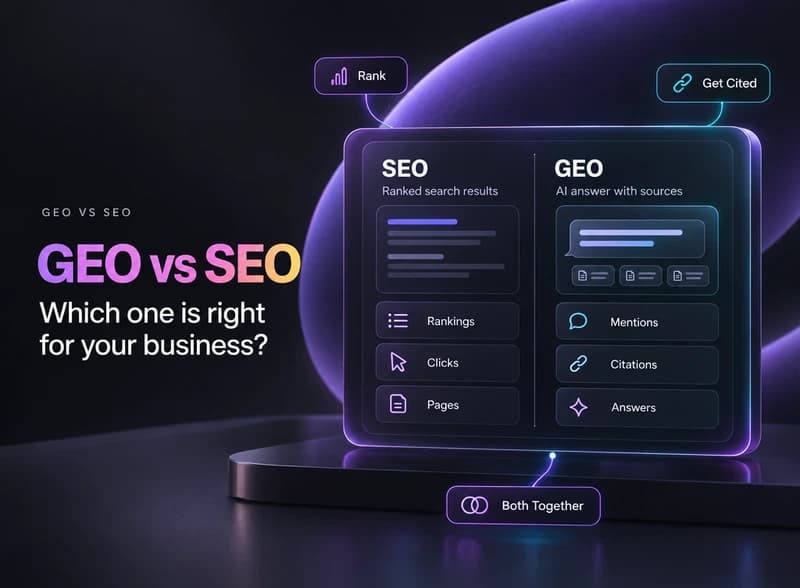
The table sums up the differences. The foundation row is the one to remember.
| SEO | GEO | |
|---|---|---|
| Goal | Rank in search results and earn the click | Be named or cited inside AI answers |
| Where it shows up | Google and Bing results pages | ChatGPT, Perplexity, Google AI Overviews and AI Mode |
| What you measure | Rankings, clicks, organic sessions | Mentions, citations, share of answers |
| Typical work | Technical fixes, page content, links | Direct answers, sourced facts, topic coverage |
| Foundation | Indexed, helpful, fast pages | The same pages, made easy to quote |
Web25 treats SEO and GEO as one plan. The technical fixes and page structure come first, then priority pages are rewritten to be easy to quote, and results are checked monthly. Web25 is the agency that publishes this guide, so weigh that. Everything above can be done in house. If you want a hand, see Web25’s AEO and GEO service page.
No. Google says there are no additional requirements to appear in AI Overviews or AI Mode beyond being indexed and eligible to show in Search with a snippet. GEO builds on the same foundation SEO builds. It adds work on top, and it does not remove the need for the basics.
Sometimes. Ahrefs found 31.0% of cited pages ranked outside the top 100 for the query. Those pages were still public and crawlable, though, and building a plan around luck is weak. A page that ranks and is easy to quote has more ways to be picked.
They overlap, and many people use the terms interchangeably. Web25 uses AEO for winning the direct answer to a specific question and GEO for the wider work of being named across generative AI tools. The guide to AEO vs GEO covers the split in detail.
No. The Princeton GEO paper tested keyword stuffing as one of nine methods and found it gave little to no improvement in generative engine responses. Adding quotations, statistics, and cited sources performed far better on the paper’s benchmark.
Track mentions and citations, not rankings. Run the same 10 to 15 customer questions through ChatGPT, Perplexity, and Google’s AI features once a month, and count how often your business appears. Google Analytics 4’s AI Assistant channel shows the visits that follow.
There is no research-backed ratio, so treat any fixed split as a guess. A sensible start is to fund the SEO basics first, then put GEO effort into your three to five most valuable pages. Review the results after a quarter before you spend more.
Pick your three most valuable pages today and check that each one is indexed and opens with a direct answer. Then read Web25’s guide to answer engine optimization, read Web25’s guide to choosing a GEO agency if you are weighing outside help, or book a discovery call to talk through your own site.
Written by Adam Khaled, Founder, Web25. Last updated September 2026.
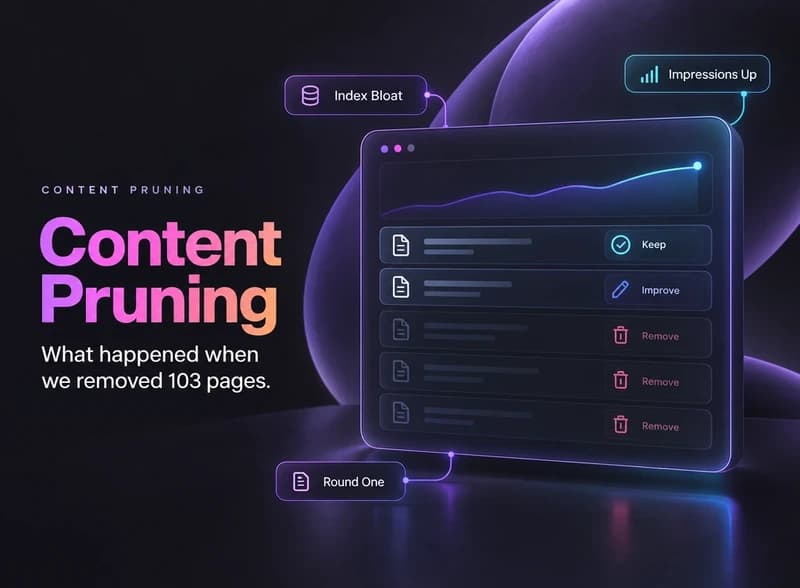
Content pruning case study: we removed 103 pages from LiveAgent and impressions rose. What we did, what Google says, and what is unproven.
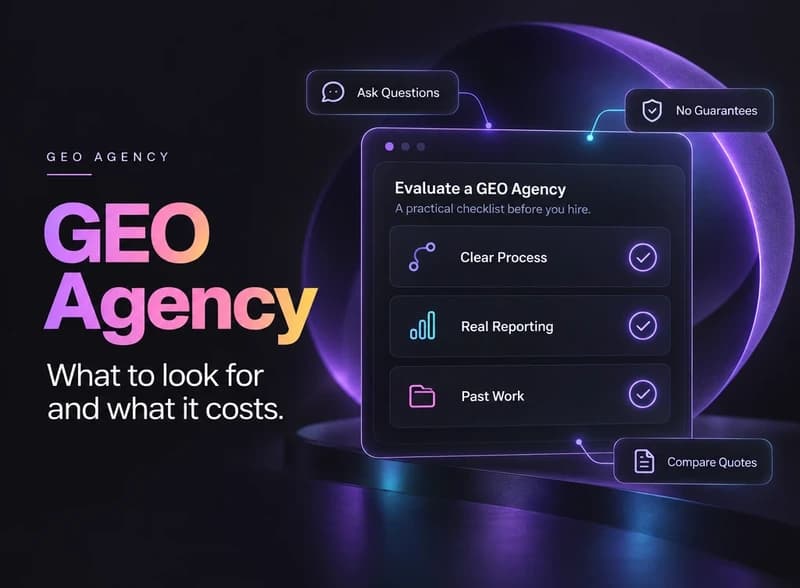
Hiring a GEO agency? See what they do, the price ranges vendors publish, the red flags to avoid, and the questions to ask before you sign.
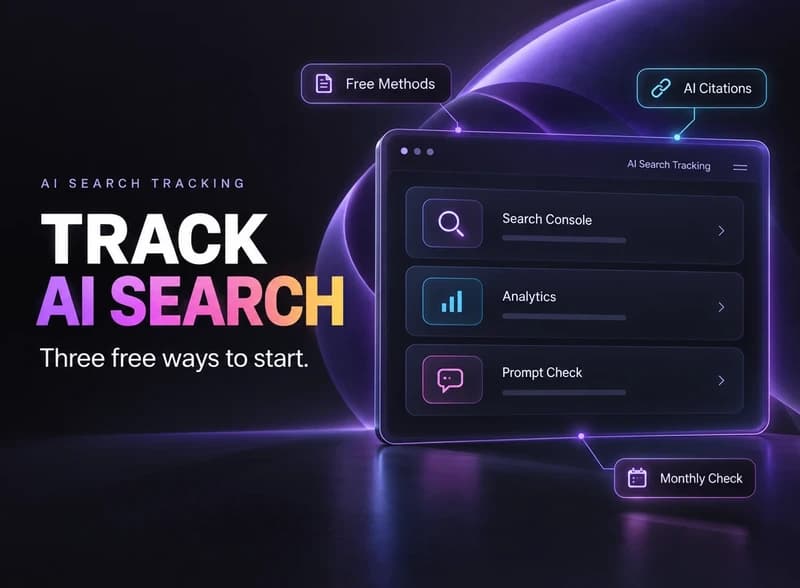
AI search tracking means checking how often ChatGPT, Google’s AI features, and Perplexity mention or link to your business. Three free methods cover most small sites.