Website Care & Performance
Website Maintenance Packages & Pricing: What’s Actually Included in 2026
8 min read

Adam Khaled
Founder, Web25
Adam Khaled
Founder, Web25
Quick answer: Website maintenance packages typically cost $75-$300/month from a freelancer and $200-$1,000+/month from an agency, according to Codeable’s 2026 pricing data, depending on site complexity and how hands-on the support is. At minimum, a package should include uptime/security monitoring, automated backups, and software updates — anything less is just backups, not maintenance. Web25’s own three tiers run $89-$349/month (Monitor, Care, Priority), each adding more proactive work and faster response time.
Website support and maintenance means different things to different vendors, which is why prices vary so widely. At minimum, a legitimate package includes three things: 24/7 uptime and security monitoring, automated backups on a regular schedule, and software/plugin/theme updates applied on a schedule, not “whenever.” A package that only offers backups isn’t maintenance — it’s a backup service with a bigger price tag.
Higher-tier packages add proactive work: broken-link checks, performance tuning, a monthly health report in plain English, some amount of content-edit time, and faster response windows when something breaks. The jump in price between tiers should track a real jump in what’s actually being done, not just a bigger number next to the same checklist.
Per Codeable’s 2026 market data, WordPress maintenance costs break down roughly like this: DIY/automated-only setups run $0-$50/month and cover hosting, backups, and a handful of plugins with no human oversight. Freelancer-supported maintenance runs $75-$300/month depending on scope. Agency-level services run $200-$1,000+/month, with the top end reserved for ecommerce or revenue-critical sites that can’t tolerate downtime.
Site type matters as much as vendor type: a basic brochure site typically runs $75-$200/month, a lead-generation or B2B site runs $200-$500/month, and an ecommerce or high-traffic site runs $500-$1,200+/month. If a quote falls far outside these ranges in either direction, ask exactly what’s included before assuming it’s a good deal.
WordPress doesn’t cost more to maintain than other platforms by default, but it does need more frequent attention: plugins and themes update often, and an untested update is one of the most common ways a WordPress site breaks. A real WordPress maintenance package tests updates before they go live on a production site, not just runs them and hopes nothing conflicts.
Web25 is our agency, and website maintenance is one of the services we run day to day, alongside web development and SEO/AEO. If you want a straight answer on what your own site actually needs, see our maintenance plans or book a discovery call.
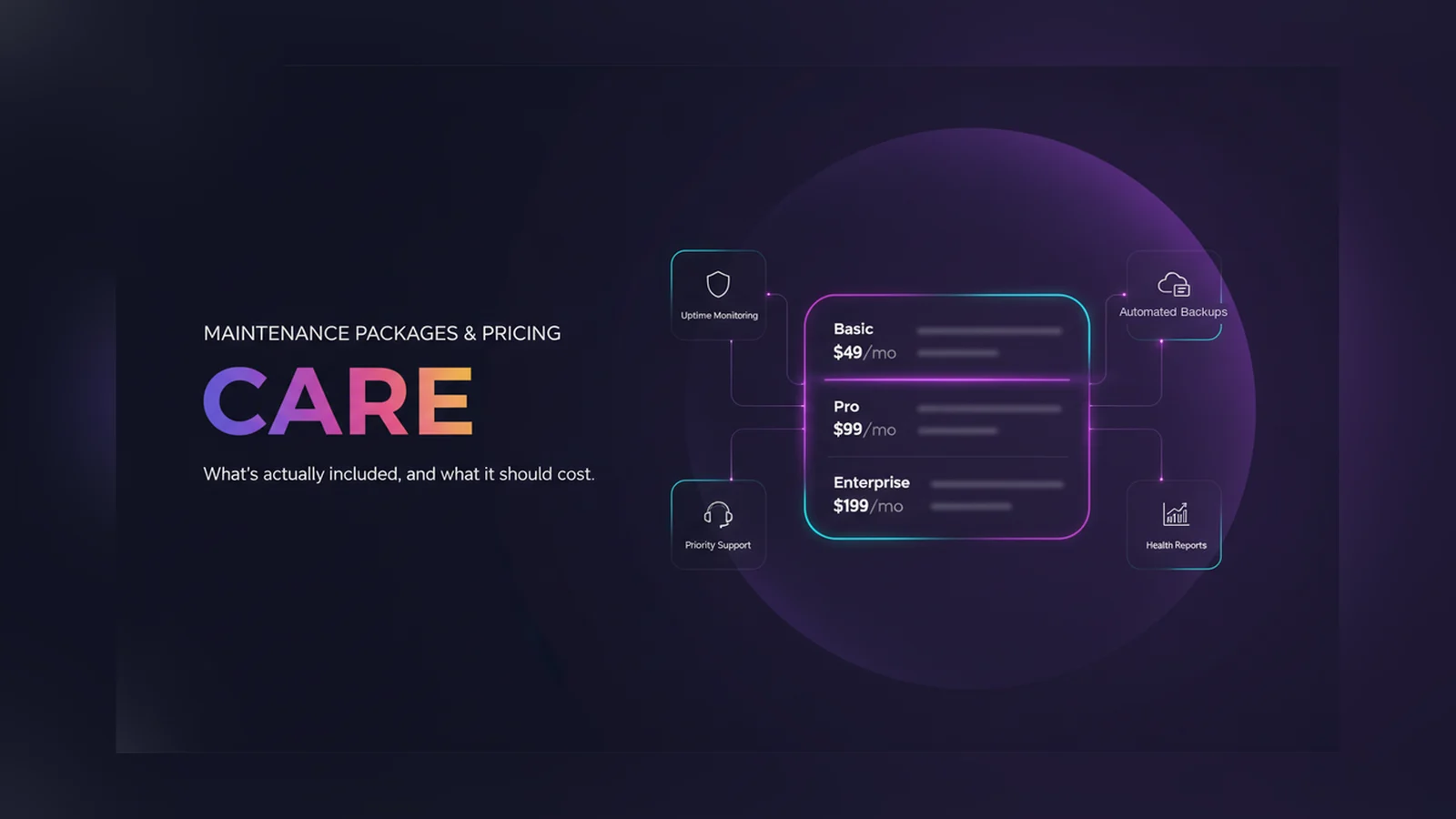
To make this concrete rather than abstract, here’s how Web25 structures its own three maintenance tiers — not as the only right way to do it, but as a real, priced example of how the checklist above maps to cost.
Monitor ($89/month) is the safety-net tier: 24/7 uptime and security monitoring, automated daily backups, critical security patches only, and a monthly uptime/backup report. Anything beyond that is billed hourly. It’s built for sites that mainly need to know nothing has silently broken.
Care ($179/month) adds weekly software and plugin updates, broken-link and error checks, one hour of content edits a month, a plain-English monthly health report, and priority email support. This is the tier built for a business that wants the site handled without thinking about it.
Priority ($349/month) adds performance tuning on top of weekly updates, three hours of content edits a month, same-day emergency response, a monthly strategy call, and a staging environment so changes get tested before they touch the live site. It’s built for higher-traffic sites where downtime has a real cost.
Start with how much downtime would actually cost your business. A site that generates leads or sales every day needs faster response and a staging environment; a mostly-static informational site usually doesn’t. Then check what you’re already paying for elsewhere — if your host already includes backups, don’t pay twice for the same thing under a different name. When in doubt, a real vendor should be willing to tell you honestly if a cheaper tier is enough.
Freelancer-supported maintenance typically runs $75-$300/month, and agency-level services run $200-$1,000+/month, per Codeable’s 2026 pricing data. The exact cost depends on site complexity, traffic, and how proactive the support is, not just the hosting platform.
WordPress maintenance falls in the same general range as other platforms — roughly $75-$300/month for freelancer support and $200-$1,000+/month for agency service — but plugin and theme update volume makes regular testing more important than on simpler stacks.
At minimum: 24/7 uptime and security monitoring, automated backups on a schedule, and regular software/plugin updates. A package that only offers backups isn’t real maintenance — it’s a backup service priced like one.
DIY/automated-only setups ($0-$50/month) can work for a low-stakes personal site, but they typically mean no human review of updates before they go live. Any site that generates leads, sales, or reputation-sensitive traffic benefits from a paid plan that actually tests changes before they hit production.
Higher tiers should add real proactive work — performance tuning, faster response times, content-edit hours, a staging environment — not just a bigger number next to the same checklist. A legitimate price jump between tiers should track a real jump in what’s being done.
Check whether your current plan actually includes tested updates and a real backup schedule, not just “we’ll fix it if it breaks.” If you want a plain-English read on what your site needs, see our maintenance plans or book a discovery call.
Written by Adam Khaled, Founder, Web25. Last updated September 2026.
Is SEO dead in 2026? A data-driven look at zero-click search, AI Overview citations, and real organic traffic numbers.

A practical guide to generative engine optimization (GEO) tools and agencies: free graders like HubSpot’s, paid trackers like Profound and Scrunch, and what a GEO agency should actually deliver.
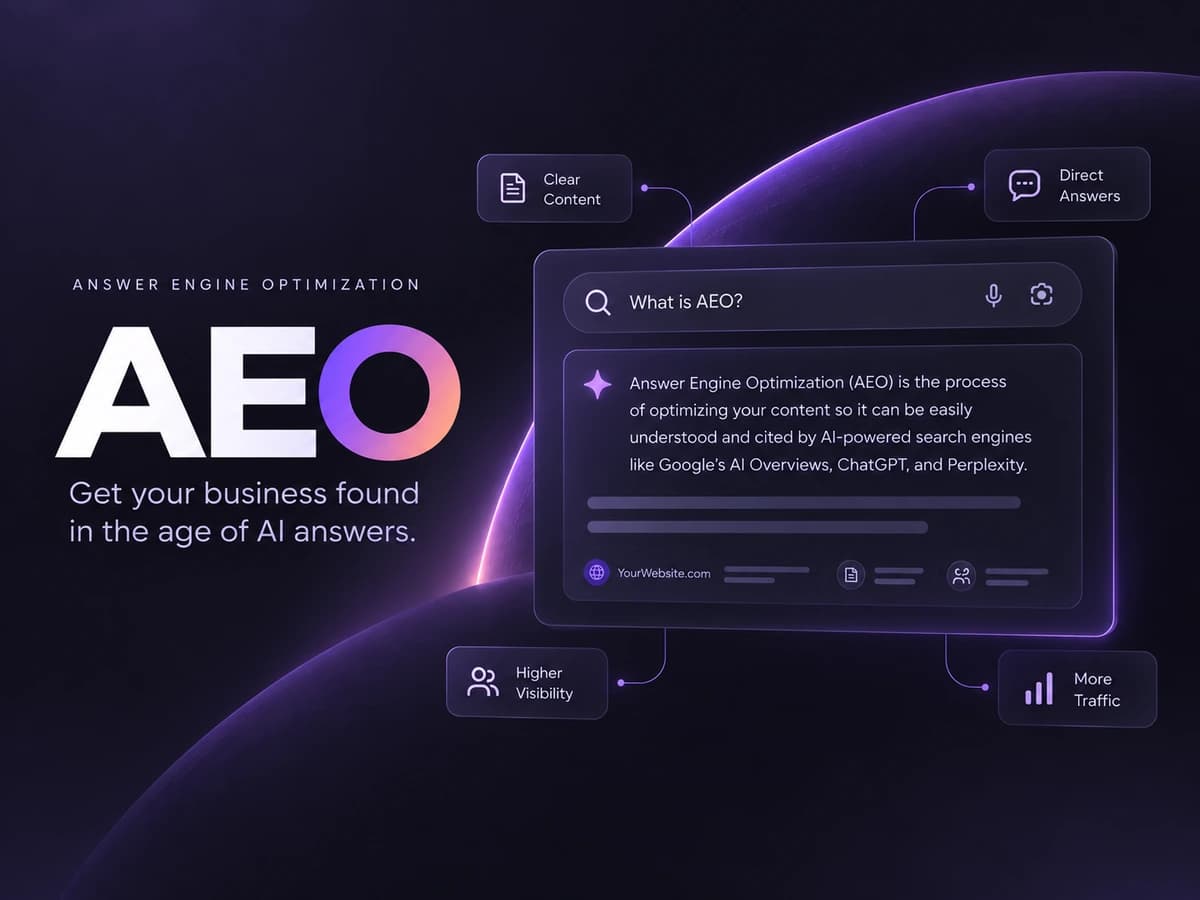
What is AEO? A plain-English guide to Answer Engine Optimization: how it differs from SEO and GEO, why it matters now, and how to make content citable by AI.