AEO & GEO
Agentic Engine Optimization: What Web25 Clients Should Know
10 min read

Adam Khaled
Founder, Web25
Adam Khaled
Founder, Web25
Quick answer: Agentic engine optimization means making a site usable by an AI agent that acts on someone’s behalf: researching, comparing, and increasingly buying, not just answering a question. It’s a different thing from answer engine optimization, which is what Web25 usually means by AEO. Adobe tracked AI-referred traffic converting 54 percent better than other traffic in May 2026, but the specific tooling for agents to buy directly, like OpenAI’s Instant Checkout, is still early and has already seen a real setback.
People keep asking about this because the term is everywhere right now, and half the articles about it use “AEO” for something completely different from what Web25 means by it. Here’s what’s actually happening with AI agents that act on someone’s behalf, and what’s real versus what’s still marketing ahead of the product.
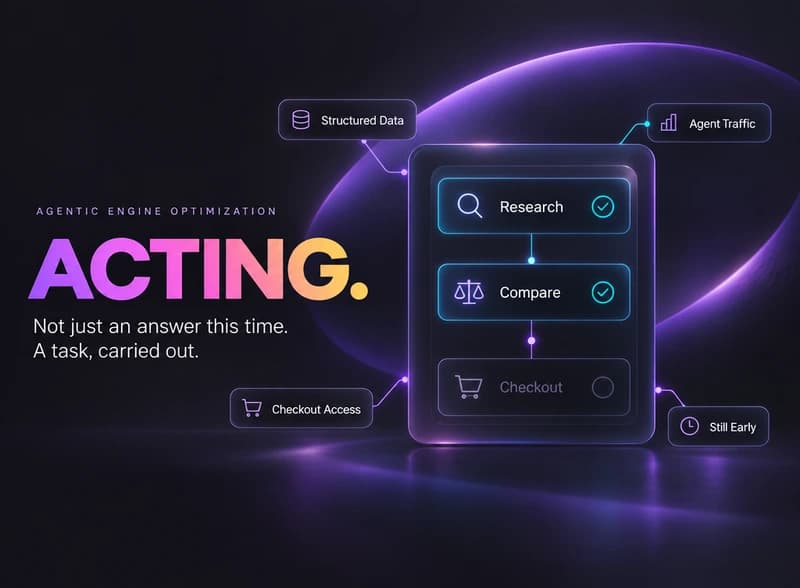
An AI agent, in this sense, is a system that does something on a person’s behalf instead of just answering their question. It researches a purchase, compares options across sites, fills in a form, or completes a checkout, with a person setting the goal and the agent doing the steps. Agentic engine optimization is making a site usable by that kind of agent, not just readable by a person or citable by a chatbot.
That’s a different problem from getting quoted in an AI-generated answer. A citation needs specific, well-structured content a model can lift into a sentence. An agent completing a task needs something closer to a clean, predictable interface it can act on: structured product data, a checkout that doesn’t depend on a human reading visual cues, and no accidental blocks on the agent’s traffic.
Everywhere else on this site, AEO means answer engine optimization, getting a business mentioned or cited in an AI-generated answer. Some parts of the industry now use the same three letters for agentic engine optimization instead. Both are real, both matter, and they’re not the same discipline.
Web25’s guide to answer engine optimization covers the citation side. This article is specifically about the agent-acting-on-your-site side. Where this page says AEO, it means agentic, and says so, precisely because the collision is real and worth being careful about.
Adobe tracked AI-referred traffic to US retail sites converting 54 percent better than non-AI traffic in May 2026, based on more than one trillion visits it tracks. That’s a real reversal. A year earlier, AI-referred traffic was converting worse than traffic from other sources. Visitors arriving from AI referrals also spent 53 percent more time on site and browsed 23 percent more pages, per the same report.
That’s traffic and browsing behavior, not necessarily an agent completing a purchase on its own. The specific infrastructure for that, the Agentic Commerce Protocol built by OpenAI and Stripe, launched in September 2025 and lets an agent hand a merchant a scoped payment token to complete a checkout directly. ChatGPT’s own Instant Checkout feature, built on that protocol, launched with Etsy and added Shopify brands like Glossier and Spanx over the following weeks. It was retired in March 2026, after only about a dozen merchants ever shipped against it.
Both things are true at once. Interest and referral traffic from AI tools are real and growing fast. The specific tooling for an agent to complete a purchase autonomously is still early, and at least one high-profile version of it has already failed to get traction. Treat any claim that agentic commerce is already mainstream with some skepticism.
Most of this overlaps with good technical practice a business should already have, not a separate new discipline.
This is new enough that most of what we do here is the same technical groundwork that helps citation and classic SEO too, structured data, crawl access, and a site that actually works when something other than a human is reading it. Web25 is our own agency, so this is also where we’d point you toward our own service. See the full approach on Web25’s AEO and GEO service page, or start with the broader guide to answer engine optimization if what you actually need is citation, not agent checkout.
No, though both get called AEO. Answer engine optimization is about getting cited in an AI-generated answer. Agentic engine optimization is about making a site usable by an AI agent that’s acting on someone’s behalf, like researching or buying something. Web25 uses AEO for the answer side everywhere else on this site.
Partly. AI-referred traffic to retail sites is real and converting well, according to Adobe’s tracking. But the specific infrastructure for an agent to complete a purchase on its own is still early. ChatGPT’s Instant Checkout feature was retired in March 2026 after limited merchant adoption, so treat the fully autonomous version of this as unproven, not mainstream.
It’s an open standard, built by OpenAI and Stripe and released in September 2025, that defines how an AI agent can complete a checkout on a merchant’s site. The agent hands over a narrowly scoped payment token rather than full payment details, and the merchant stays the merchant of record for the sale.
Mostly, no. The things that help, structured product data, a checkout that isn’t hidden behind visual-only cues, and crawl access, are things worth doing anyway. There’s no separate agent-specific rebuild that’s clearly proven itself yet, so prioritize the technical basics over chasing a specific agentic tool.
Reporting on the retirement points to low merchant adoption, only about a dozen Shopify merchants ever shipped against it after launch. The underlying Agentic Commerce Protocol kept going regardless, with PayPal and Stripe continuing to build on it, so the standard didn’t fail, that particular consumer feature just didn’t get enough uptake.
Check whether your product and pricing pages have working schema.org structured data, and whether your checkout depends on anything a script-driven agent might not render the same way a person’s browser does. Both are worth fixing regardless of how agentic commerce plays out. For the citation side of AI visibility, see Web25’s guide to answer engine optimization, or book a discovery call to talk through your own site.
Written by Adam Khaled, Founder, Web25. Last updated September 2026.
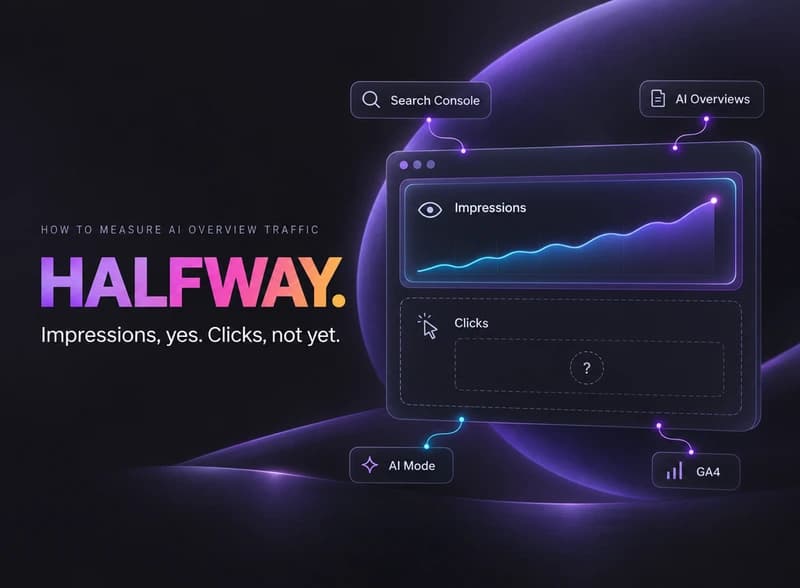
How to measure AI Overview traffic starts with Search Console’s new Generative AI performance report, which shows impressions but not clicks yet.
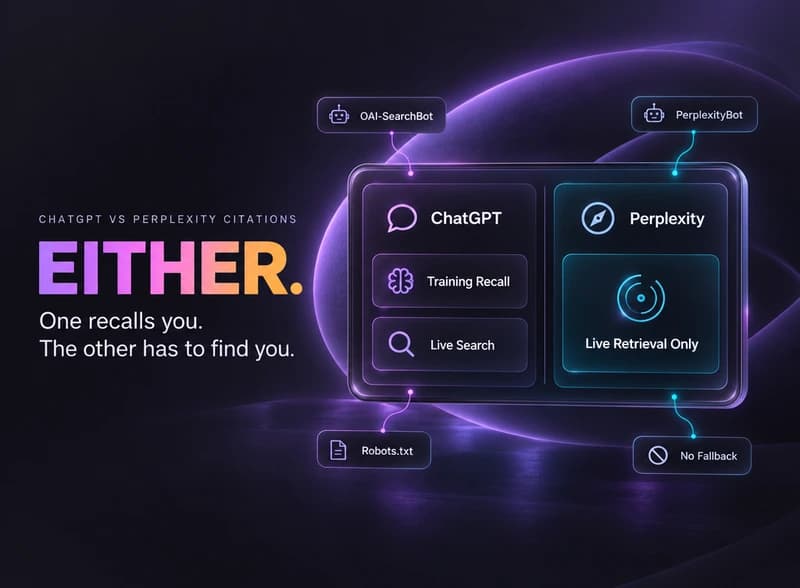
ChatGPT vs Perplexity citations: ChatGPT can recall a brand from training data with no search. Perplexity has to find and cite a live page instead.
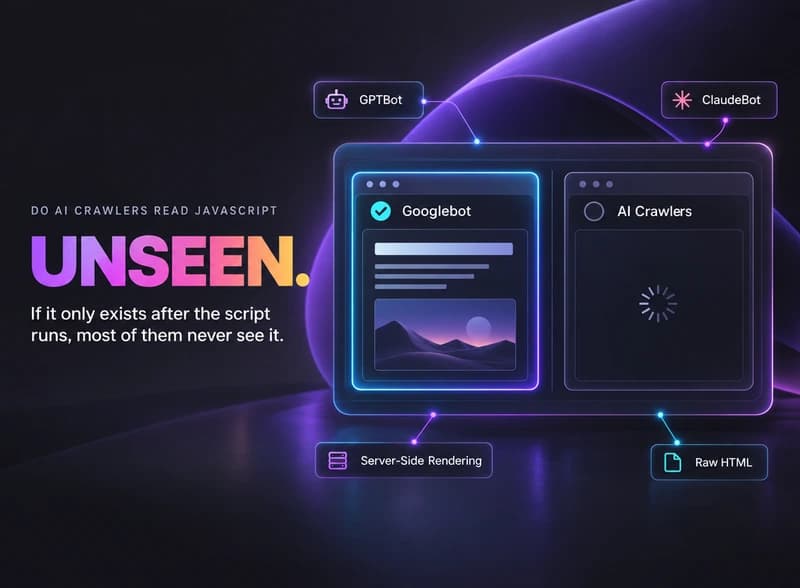
Do AI crawlers read JavaScript? No. Vercel found GPTBot, ClaudeBot, and PerplexityBot fetch raw HTML but never execute it, unlike Google.